
The Problem With Being a Film “Maker”
This essay started off being about the words we use to describe the people who "make" movies. But should that be what we call it?
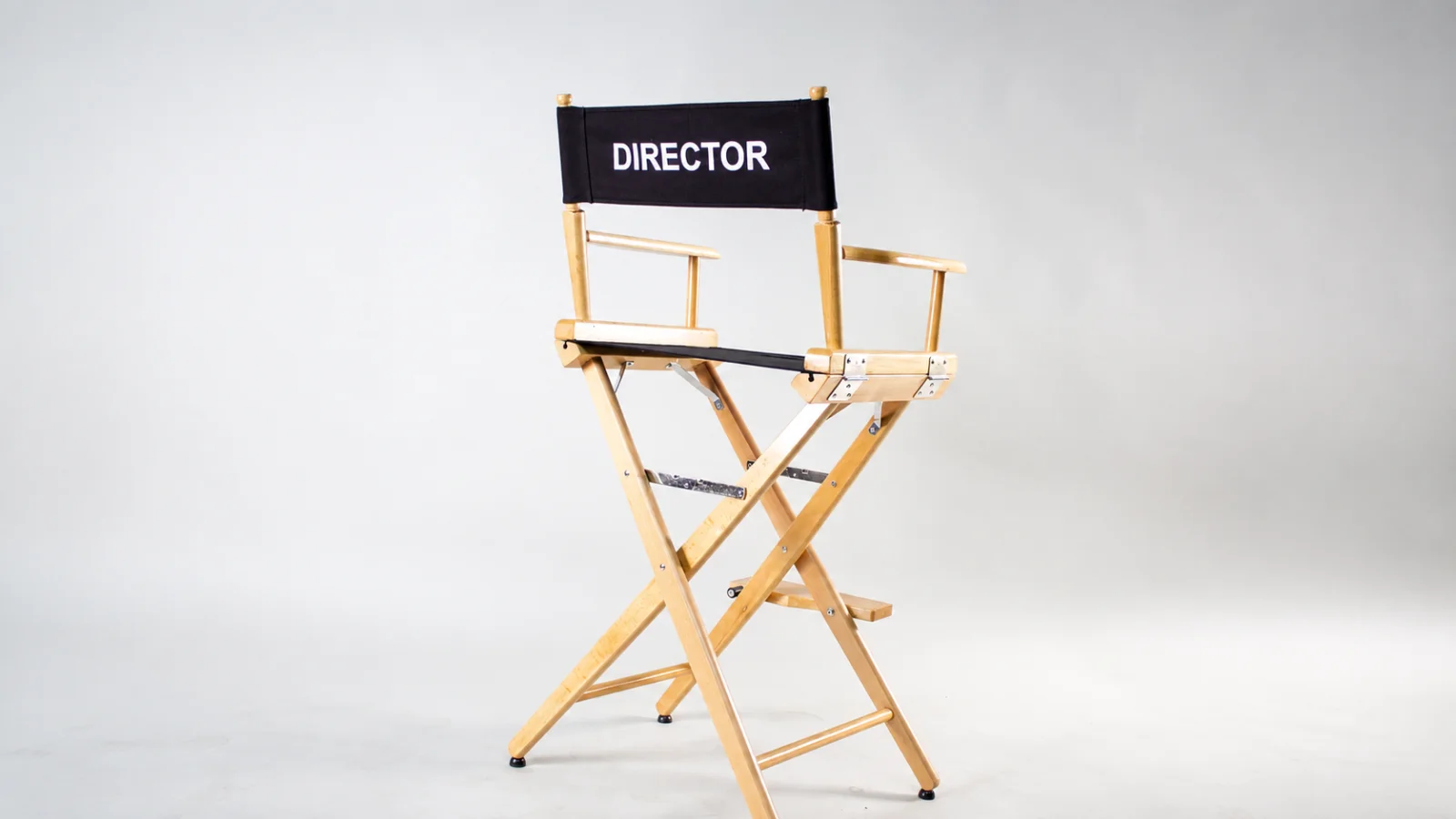
The title of this essay may be a little deceptive. There is nothing inherently wrong with being a filmmaker. While obviously there are plenty of problems with being an underemployed filmmaker, or perhaps a filmmaker who lacks taste, judgment or skill, those are all discussions for another day.
The problem I am interested in surrounds the suffix -maker, and the broader connotation of what being a maker means.
“Filmmaker” is today so broadly used that it barely describes any of us anymore. Every film student, also a filmmaker. Every influencer is also a filmmaker. A wedding videographer is a filmmaker. The guy who catches a fish, points a camera at himself and puts the results on Instagram definitely describes himself as a filmmaker.
To borrow the logic of The Incredibles, when everyone’s super, no one will be.
Is everyone a filmmaker, or no one?
Having a lack of specificity is only a surface problem. Really even if we reserved the word exclusively for people working in narrative film and television, filmmaker is still a pretty damn generic description.
I’ll concede, it’s an excellent word to describe what below the line film crews do. Every set department employs makers, and lots of them, everywhere. The production office staff are makers, everyone in post production is most certainly a maker. There are creative decisions every step of the way, so while making is building, it’s definitely not non-creative.
If you asked most working directors if they swung a hammer to build their movie’s sets, or if you asked the actors if they enjoyed sewing their own costumes, the idea sounds ridiculous. Someone else did those jobs. Those are clearly maker jobs. Materials being transformed is fundamental to the idea when something is being made.
Which causes me to realize the word filmmaker might be perfect for many people who make a movie, but it inadequately describes the much larger process.
The hardest part is rarely assembling all the pieces and hiring the people to put it together. The constant judgement of deciding what a movie needs those pieces to actually become is the real task.
I’ve noticed I’m not the only one thinking about this.
I came across a filmmaker proclaiming their job was actually a “film developer.” It’s widely known that movies start in “development.” It is where you’ll find “development hell.” But is a “Film Developer” really a better choice? I’m going to say no.
Development is about progress and maturation. The argument could be made that development is all about transforming purpose, like with real estate and many other kinds of developments. The movie and TV development process is different and iterative. It regularly involves years of writing, rewriting, conversations, attachments, financing, rejection, discovery and reconsideration. Often nobody knows exactly what the finished thing will be because the process itself is revealing it. And perhaps most importantly, the film is not finished once it has been developed.
Certain filmmakers are called auteurs. Auteur simply means author in French, and it is useful when describing filmmakers whose personality and creative judgment dominate their work. But I’ll argue it is an imperfect answer to the filmmaker name problem too. Movies already have writers, and even the most director-driven film is rarely the product of one person imposing their original ideas on passive materials. Producers, directors, writers, actors, cinematographers, production designers, editors and countless others continually adjust the conditions to what a film finally becomes.
The word I keep coming back to instead is nurture.
At the end of the day, the people who guide, shape and toil a narrative journey from beginning to end aren’t so much making it, as they are parenting. Very little about the process of willing a good movie into existence resembles “making” in the ordinary sense of the word. Making implies fabrication. You begin with materials and a plan, perform a series of operations, and eventually arrive at the thing described by the plan.
This process works well for (and describing the process of) assembling a kitchen table or a peanut butter and jelly sandwich. But, truly it’s much less of an accurate description of how a movie comes into existence.
Speaking as someone who has manufactured several products you can buy in a store, worked below the line in the making of many movies, and above the line as a producer, I believe that when film-making is working properly, much of the job is really not manufacturing. It is rather creating and adjusting the conditions in which something can grow.
A movie often begins as little more than a seed. An idea. An image. A character. Or perhaps it’s a few pages. From there it has to be fed, protected, challenged, reshaped and often cut way back. During production, enormous amounts of deliberate skill and effort are applied very quickly, but even then the filmmaker is dealing with things that cannot simply be commanded into existence. Actors will give you performances you did not anticipate. Locations behave unexpectedly. Weather changes, sometimes repeatedly. Money and other resources disappear. Time disappears fastest of all. Something that reads brilliant on the page dies in front of the camera, while the thing nobody planned suddenly makes the entire scene, or movie work better than expected.
It happens again in editing. You may have shot exactly what was written and discover that the movie wants something else. Scenes need to disappear, and the order needs to change. A performance needs more room, and a moment that seemed insignificant becomes essential. This can’t be entirely paint-by-numbers. Judgment replaces the blueprint every time.
In this sense, filmmaking is much more biological than mechanical. It is closer to cooking, parenting or farming than manufacturing. So let’s take a look at these 3 occupational concepts for a little inspiration to maybe come up with an alternative to filmmaker.
A great chef cannot simply assemble a complicated meal. Ingredients have to be combined, heated, cooled and timed correctly. They can make substitutions, they can improvise. The process requires great discipline, coordination and in the case of professionals, they need systems to run a great kitchen or restaurant where someone could try the food. A James Bear award chef provides their patrons an experience, one that is memorable. In this regard there’s a lot of parallels with filmmaking at the highest level.
A parents job is to take a baby and nurture them to become someone who can exist in society as an adult. Like with movies, as a parent there’s no short cuts. You can’t just manufacture a functional adult. The world is full of terrific and well-adjusted people who exist in spite of outrageously bad and loveless parenting. And there are likewise those born to all the love, attention and privilege possible, and still can’t make it on their own in the world. I don’t think it takes much of a leap to see how much above-the-line work is really the parenting of a movie.
In the case of farming, by and large the farmer only sources the seed, creates the right conditions and keeps responding to what happens in order to make sure that what they produce turns out as intended.
It may sound reductive, but this is exactly what I believe most producers and directors are actually doing most of the time when working on a movie. It is also why some kind farming related name or suffix might be the most accurate descriptor for what many filmmakers really are.
Farmers understand nurturing, and they also understand unusually hard work. They prepare the soil, plant the seed, provide water and nutrients, protect what is growing, deal with disease, fight the weather and make hundreds of other judgments along the way. They have considerable control over the process, but never complete control over the outcome. Too little intervention kills what they are growing. So does too much.
That’s nurturing. And that also sounds a lot like making movies.
Every film is different because every film should be different. Unlike a respectable PB&, there is no blueprint that guarantees the right result. Good filmmakers spend much of their time observing what they have, understanding what it needs and deciding what to do next. The craft is not merely knowing how to execute a plan. It is having the taste and judgment to recognize when and where the plan needs to change.
Independent filmmakers may be the clearest version of this. They are a little like the folks you meet at a local farmers market. The person standing behind the table may be the same person who planted the crop, fought to keep it alive, harvested it, brought it to market, and will wrap it up for you when you buy it. What they are selling is directly connected to the person who grew it.
The farm-to-table movement was, at least in part, about shortening the distance between farmers and the people who ultimately ate what they produced. The goal was few, if any 3rd party intermediaries. Greater connection for the customer as to where something came from and more control over what finally arrives on the table.
That is one reason I find the idea behind Ted Hope’s Non-dē movement so interesting. At its best, it is akin to having a farm-to-theater experience, and they are more likely to collect more of the money paid for it. The people who grew the movie remain involved in getting it to the audience, making sure that what finally reaches them is as close as possible to the thing they spent all that time trying to bring into the world.
I’m an optimist about Independent, DIY and the burgeoning Non-dē cinema that’s forming right now. It means we will have more and better options of what to watch. The bad news is that we are probably stuck with the word filmmaker. So despite all of my wasted typing to get people to think about farming, the popularity of filmmaker really has all but made the decision for us. It’s easy to say, as I made clear from the get-go it’s also ubiquitous.
But as I’ve increasingly contemplated better ways of understanding dysfunctional systems inside creating entertainment, the number one thing I keep coming back to is that the reason we get so much same-same, and so many failures. That is, the entertainment industry treats entertainment like a commodity coming from a factory, like it’s a highly processed saltine cracker, rather than the prize winning apple that it is. I believe that is a mistake. We really should be treating entertainment like a farm, and those involved who make it work, or not, are the farmers.
No good movie was ever simply assembled. I would argue that every good movie you’ve ever seen, including the big ones, were actually grown.